michael-dean-k/

On Monday 6/15, I'm hosting a workshop to kick off a reading group for classic essays: RSVP here.

Topic

attention-economy

18 pieces

A site of one's own

· 743 words
  1. As a writer needs a site of one's own, a place designed for their particular psychology so they can be the most prolific, honest, adventurous version of themselves. Solitude is important. Montaigne, the founder of the essay, wrote up in his tower for a decade. When you are your own audience, your practice is self-justifying. You are intrinsically fulfilled, and do it regardless of validation, growth, or revenue. To become self-validating is to become a nuclear engine of creativity. When you write on your own site, chances are you will spend much time on ideas that no one will read. That's inefficient, but essays are inefficient. I need to ruthlessly follow what matters to me, with no fear of being illegible or invisible to others.
  2. That said, you can and should invite others into your garage. I still plan to keep my Substack and post there, but it will be more like a newsletter, a digest of the controlled explosions happening in my own neighborhood. I do believe in the value, even, the responsibility, of writing in public. By making your place tidy enough for friends, strangers, students, customers, mentors, heroes, whoever, to come in, it makes you put an extra oomph in your crafting of language, and it creates seeds from which relationships can grow. When you have visitors in your territory, they play by your own rules, so you're generally safe from mobs and barbarians. They will not trample over your furniture and throw the books from your shelf like they would in the town square.
  3. In 2023, I was hopeful that Substack could be an all-in-one platform—a website/newsletter/discovery engine—but it has heavily shifted into an app-centric social media platform. The app starts you off in an endless, algorithmic, engagement-ranked feed, and the design has slowly evolved to trap you in the app. When you click in article, the default URL is the Substack one. When you click into a person, you can't even go to their site anymore; you can only view them through their profile template. This means all the customization and self-archiving and mythologizing that goes into your site is off limits to the app, the thing they're trying to corrall attention through.
  4. I'm very allergic to "Substack is dead" posts, and most of the critique is often a projection of their own weaknesses (ie: when people naturally stop growing, it's easy to blame the algorithm than to take responsibility for it). In my case, the Substack algorithm has worked pretty well over the last two years, and I'd be stupid to abandon it. But the whole system has limited my intrinsic passion to write, and that matters more, enough that I'm willing to take the risk with a split publishing system: Substack newsletters that link out to my site.
  5. Back in 2020, a Write of Passage concept was the "public to private bridge," meaning you find people in social media feeds, but then redirect them back to a place of your own. Now that Substack is mostly a social media network, I think that same strategy applies. It's not where I want to host my essays anymore. I'll host newsletters and paid content there, but the timeless stuff wants to live in a place that is timeless.
  6. If you have a portfolio of writing, Substack feels like a pretty bad way to make your old work legible, especially within the app. There are no tags or sections. No about page. No navigation system. No ability to frame call to actions as visually dominant. The beauty of your website, especially if you build it from local markdown files, is (1) you have a single source of truth for all your writing, and (2) you can just respawn new interface and navigation systems as your portfolio evolves.
  7. Even though Substack lets you export your essays, it's really more like a failsafe, a backup incase you ever decide to leave. Of course, it's very nice to have that! But it's still a cloud-based system, where editing your past files is slow and clunky, and you have limited ability to point your essays elsewhere. When I have a local folder of my essays, I can very easily spin up a stylized website around any essay, or any group of essays (say, for example, if I'm making a proposal and I want to curate a handful of essays. I can point my AI at any combination of files and folders for context.

Human-shaped sensemaking

Why essays see what algorithms can't (the themes in The Best Internet Essays 2025)

· 3122 words

I remember flipping through TIME’s 1999 Year in Review in elementary school, thinking some all-seeing committee had seen it all, reporting on the celebrities, wars, and gadgets that would one day make a history textbook. It wasn’t just a recap of the year, but a pivot into the millennium. It…

read essay →

Quality Algorithm

· 437 words

“The Internet needs a quality algorithm.” This was the opening line of my essay prize announcement, and I want to revisit it now that it's done. Is there a correlation between writing quality and audience size? 

Algorithms are low-trust right now because they’re adversarial—“for you” gaslighting (usually)—and they reward engagement, popularity, monetization, etc. The 2010s-era algorithms are based on discrete events: clicks, likes, measurable things. They might look at keywords to guess the topic of an essay, but it’s effectively blind to the overall quality of a piece. Quality is nebulous, after all. Small magazines can each have their own vision of what’s good, but for a million/billion-person network, there’s no consensus, and quantity is way more important anyway.

So this essay competition was a v1 attempt to define and search for quality. The overall search space was small, but it was a chance to experiment with curation, and resulted in The Best Internet Essays 2025. It’s interesting to me that the featured writers ended up varying in audience size, evenly distributed between 10s, to 100s, to 1,000s, to 10,000+ subscribers.

Again, limited sample, but interesting to ponder: the tangible thing (reach) is a power law distribution (1% have big audiences), but the intangible thing (quality), the thing that matters more, is independent of scale. It means that for all the great writers with 10k audiences who are highly visible, there are possibly 100x writers of similar caliber who are undiscovered, in algorithmic obscurity. 

This isn’t too surprising, and the usual reply is, “well it’s not enough to write well, it’s your responsibility to be consistent, to be your own marketer and publicist, to make sure your work gets read.” I get that this is what’s been required, but what if it weren’t? Wouldn’t it be better if a platform could search for quality at scale so writers could just do their thing? This would also give visibility to those who aren't full-time writers, people who publish 1-2 essays per year around the interesting problems they’re working on, but have no bandwidth to build an audience each week.

Still have to think through v2, the 2026 prize, but the question in my mind is how can I expand the search space? Can I have agents scan the Internet, assemble RSS feeds to find great essays, design an algorithm to filter for the previously intangible, build community into the process, and then curate/share the stuff that comes through? The aspiration is to get better each year at surfacing great essays from independent writers on the basis of merit, and this book is what came through the first pass.
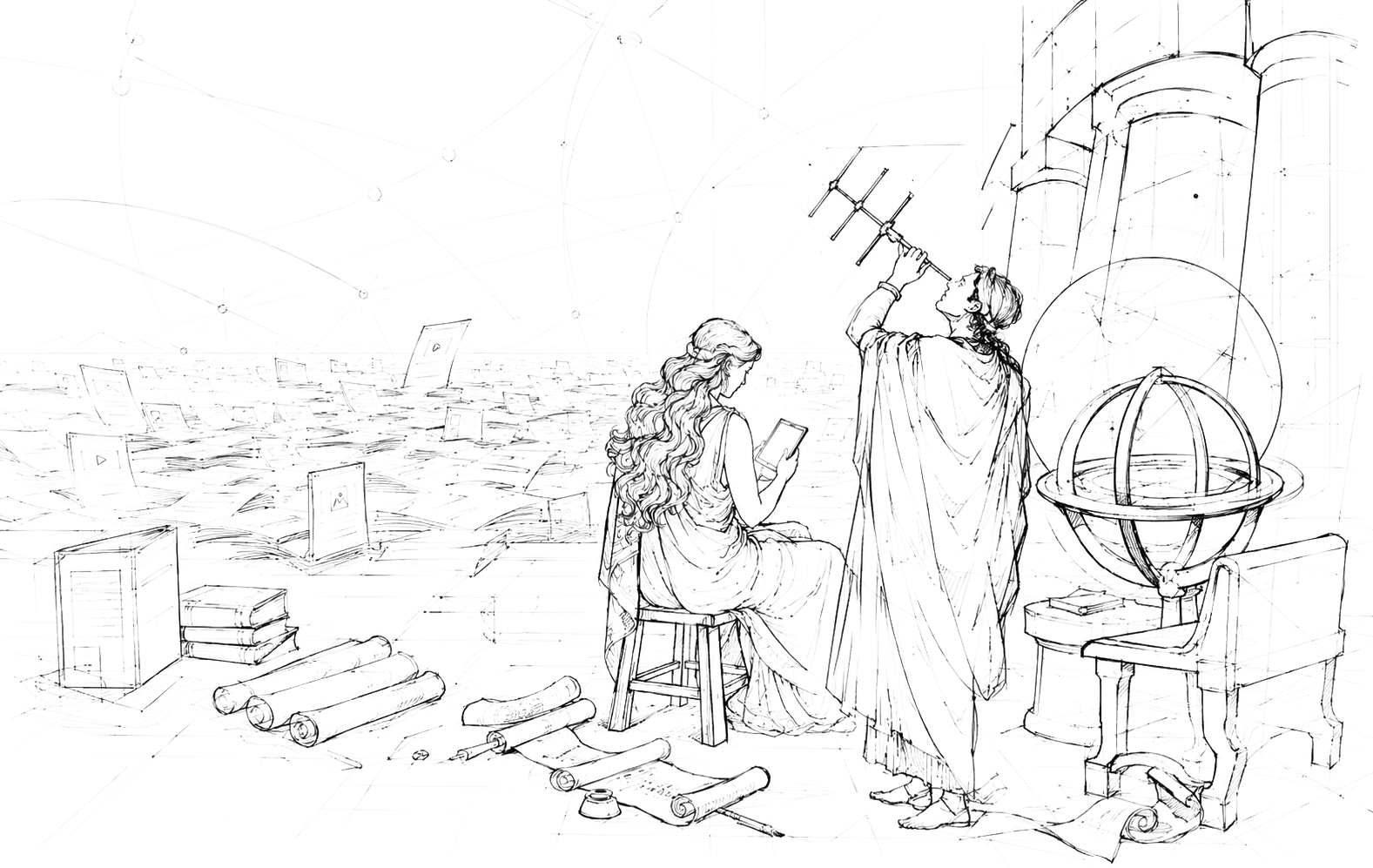
→ source

When fake stunts go viral

· 88 words

There is a viral video of Milwaukee Brewer pitcher, Jacob Misiorowski, throwing a 104 mph fastball to knock an apple off a teammates head, who is sitting on a chair at home plate, arms crossed, back to pitcher. Yes, it's edited, but will everyone tell? What if 5% can't? How many hundreds of kids will try this stunt? Reminds of me of William S. Burroughs thinking he could drunkly shoot a beer bottle off his wife's head and missing. I guess the allure of virality can poison anyone.

Software Incentives

· 435 words

One of the thrills of the AI revolution will be how it untangles software from bad incentives. Today, software is expensive to build and maintain, and so it needs returns to fund itself. The big social media companies have annual expenses of $50m-$50b; they are in no position to operate from virtues, or to deliver on their stated aspirations of “connecting the world,” because they need to optimize for attention and convert it to revenue to fund the ridiculous scale of the operation.

But now we’ve hit the point where autonomous coding is real: Claude’s Opus 4.5 can code for many hours straight. I am currently “rebuilding Circle,” the community platform, except not as a platform, but as a single customized instance for my community (Essay Club). I am maybe 4 hours in and half way done. Circle wanted $1k/year, so I built my own with a $20/mo subscription.

When you can just prompt software into existence, you don’t need fundraising, an expanding team, and all the sacrifices that come with capital. Software can start reflecting the will of visionaries, rather than the exploited psyches of the masses. Of course, AI coding will also enable huckster bot swarms to sell Candy Crush clones and other brain rot variants, but more importantly I think we’re entering a new era of techno-activism.

Millions will use their weekends to spin up apps, sites, tools, platforms, and networks, not for the sake of colonizing the planet’s attention, but for the sake of gift-giving or mischief-making or culture-shaping. It could mean that we shift our attention from hyper-commoditized feeds to mission-driven places.

Today, I think a single person could spin up a million-person writing-based network for under $100k/year (my guess is that’s <0.2% of Substack’s cost). If you clone something exactly (like Twitter>Bluesky), there’s little reason to switch because you lose the network effects. But the oozification of code & interface means that we can start experimenting with better social architectures. How might a network built for human flourishing actually function? A novel concept paired with a small critical mass (just a few hundred people) might be enough to trigger a cascade of platform switching.

The irony is that AI coding is only possible because big companies have been able to amass extreme amounts of capital, resources, and data, but in doing so they’ve released something that could erode their own monopolies on attention, the last scarce resource. Now I think it comes down to what people decide to build. If everyone can build anything, will we each try to build our own empire of extraction, or will we contribute to a culture we want to live in ourselves?

→ source

You don't have a phone problem

· 99 words

You don’t have a phone problem, you are just poisoning yourself. I'm tired of people lamenting over phones, smartphones, screens—it's not the glass! I want to make a case why smartphones are essential for flourishing in our modern life. The real problem is with “inbound feeds,” and that’s not just social media, but email inboxes and task lists. By installing software with infinite refresh, the possibility of novelty consumes you. I say this all out loud to my wife, as the guy next to me is absorbed in a sloptunnel on TikTok, and it’s 50/50 if he heard me.

On why feeds are soul poision

· 298 words

Even if a SM feed is filled with all of your favorite ideas, friends, and thinkers, it would still be poison from the sheer volume of randomness. Even the act of seeing two things in feed, forces you to shift from one context to another, forcing you to shift frames, destabilizing and disembodying you.

Alternatively, if you had a feed of a hundred things, but they all revolve around the same content, all spawned from a singular intention, I think it would be less dizzying; it’s more enables depth into your present, embodied frame. There is less of a “slot machine” effect. 

It’s not that feeds or algorithms are bad; they only became bad when they strip context. The logic of most feeds, however, do not care if you feel oriented. They have a simple reward function, show you as many different things as they can, to see which ones drive behavior. They are running a real-time self-adaptive experiment on your preferences, in the hope to discover which patterns might nudge you into their desired behavior (whether it’s towards an ad or towards an on-platform paid subscription by a beloved writer, they are effectively the same—it’s an algorithm that is not being real with you, and not respecting your attention).

I feel like a broken record in prescribing a solution, but it’s basically Plexus (RIP): show nothing until you post, and then from what you post, share a feed of semantically related posts. Substack, as a writing network, is a unique position to build this. It has a lot of long form content: not just notes, but essays, podcasts, and videos. It should be looking at the granular units, semantically embedding paragraphs, and then those become atomic objects that help populate the “semantic feed” generated after every Note.

UI as attention guardrails

· 113 words

Whenever you open an app you give it permission to shape the grooves of your attention. Through its interface, it suggests and implies a limited range of ways you can interact. This all sounds very abstract, and what I really want to say is that I think my Things app (the #1 best selling productivity app, I assume) keeps me in a kind of productivity hell. I have, what, 84 things to do today? Tasks lists should not be ambient all-day guides. I should leave it in the closet, go in there and whiff it for 5 minutes, max 10, commit to memory whatever is important, and then not go back until tomorrow.

Reading in public is rude too

· 166 words

My head is tilted down 60 degrees, and I’m cut off from the people and world around me. My cousin’s cousin was actually in the shop, and I almost missed her. Reading Emerson while waiting online feels extremely rude. Isn’t reading a physical book in public just as bad as reading on your smartphone?

Of course, books aren’t evil. Neither are screens. It’s the action/context mismatch that’s wrong. I guess the problem is that screens make it easy to have all your books with you at all times, and so it’s convenient and normal to be rude.

What you reveal when you say screens are bad for society is that you don’t have the ability to wield tremendous power. It’s not the smartphones to blame, but the apps on them, and so often we realize how mindlessly we install them, and how long we’re willing to be mesmerized by a bad information architecture. When we reach the iOS vibe code singularity, there will be no excuses.

Curating the infinite

· 469 words

If you give an infinite amount of monkeys a typewriter, with an infinite amount of time (obviously theoretical because neither a being or time can be infinite) not only will one of them produce Shakespeare, but the entire Western Canon would be re-derived from scratch in every moment of reality. This captures the difference between astronomic values and infinite values. In astronomic values, given an absurd amount of time, one monkey will eventually do the the impossible and write Shakespeare. But with infinite values, monkeys are inventing Shakespeare as the grammar of space-time. The astronomical shows that the impossible could happen once, but the infinite shows that the impossible could become the fabric of a reality.

And Sora is, like the 2005 Facebook feed, just the start of something new, but something that might actually be as nauseating as the infinite. If you have agents that can reproduce endlessly (potentially infinite “creators”), with the ability to remix/generate one piece of content against every other node in a growing cultural matrix (actually infinite), with limited time/cost (not infinitesimal, but fractional), that leads to every possible reality happening in every moment, at a cost that’s bearable to tech corporations.

I think I find this all interesting now, because something as abstract as the infinite might shape the future of creation/consumption. And to tie this to our talk last night about optimism/pessimism, I think the difference comes down to those who have the agency and discernment to plug in to the infinite on their own terms. It could be as simple as, if you plug in to OpenAI, Meta, or X, and let them use your data to create a generative algorithmic for you, you will be swept away in limitless personalized TV static. But if you know how to build your own tools (hardware, software, social communities), then you have a chance to harness it.

In Sora, I’m currently in a Bob Ross K-Hole, and it triggered an unexplainable interest in trying to explore the edges of Bob Ross lore, which is, now that I write this, so random and pointless and misaligned, but when I do it I’m cracking up and can’t really stop.

Contrast that with my own theoretical "infinite system," where every new log surfaces the 100 most related logs, and then each of those logs becomes the seed for an essay generator, each of which gets rewritten endlessly (for hours, days, or weeks) via an EA software feedback loop, until I decide I want to read it.

And so if you dive into the infinite, even if it’s something you love, it can easily destroy you, and instead we need to make our own systems/agents that can surf those edges for us, and bring back just the right amount of information that we can meaningfully work with.

Sora

· 406 words

I'm ashamed to admit that a meme on Sora got me to laugh and cry so hard that my head was in pain and I had to close the app. It was Martin Luther King’s “I Have a Dream Speech,” but AI replaced the text with the script from the meme of that 4-year-old who can’t describe his dream (“Have you ever had a dream that you, um, you had, your, you— you could, you’ll do, you— you want, you, you could do…” etc.). There is something about seeing a great American orator mumble endlessly that I apparently can’t handle. Technically, I “made” this meme, which makes it worse, like I’m laughing at my own jokes.

What makes Sora an incredibly weird experiment is that, in 10 seconds, anyone can upload their “likeness.” Basically, you spin your head around, you say some words, and you get a photorealistic avatar that you can lend to your friends so they can prompt you into absurd situations. Of course, Sam Altman is one of the default avatars available. 50% of the app is Sam Altman fan fiction. You will find him stealing graphics cards from Target, smoking weed and saying “we’re cooked,” debating Cartman in court, using Pikachu to power a fusion reactor, etc. Also if you like Pikachu, there is now infinite Pikachu content. It is all very dumb, but it is endlessly novel.

This feels like a preview of a culture who only communicates through Superbowl commercial skits. I hope it doesn’t work, but I fear it might. I assume most people are questioning “why would anybody make their likeness public?” The answer is attention. I imagine that, within a week or two, Sam will have the montages and metrics to sway influencers and celebrities. It will be pitched as the new way to engage your audience: “let them create through you.” They know they can’t use the likeness of real people; I wonder if the point of this app (a wrapper over their underlying video model) is to get people to hand over their identity for free.

I am debating if I should delete this from my phone (I don’t allow any feeds on my phone … except Substack), or, if I should lean in, sell my likeness, and write about the consequences. This feels like an essay-worthy moment, but I can’t find the terms and conditions, and I get paranoid when I imagine the possibilities.

Freedom of Speech Is Not Enough

· 110 words

"Freedom of speech" is not enough. The freedom to say what you want is irrelevant if no one can discover what you’re saying. It’s an illusion of freedom. What matters is:

  1. Algorithmic transparency: the ability to see, audit, control the systems to route you information.
  2. Interpetability of perspectives: the ability to see the multiple ways to interpret an event, not just a single propagandic angle.
  3. Consensus building: the ability for people to weigh in, analyze a discussion, and agree on if something is valuable or not, thus re-weighting the credibility of those involved in the discussion.

Fixing these three things could radically reduce addiction, polatiry, and fatigue on the Internet.

Swarm virtues

· 274 words

"The Death of the Corporate Job" went viral on Substack: 3.3k likes in a few days (eventually went up to 20k, I think). I am pretty sure this was AI-generated. I don’t feel like posting about it though. It’s clear to me that this is a kid in his 20s, building an AI tool for career discovery; he sees this essay as marketing. It will probably bring him a lot of customers. He might possibly help a lot people. I’m sure he believes in his mission.

What irks me is that the essay has been instrumentalized. There are fake I’s with vague personal details. Intellectually, it’s a ripoff of Bullshit Jobs. There’s no structural clarity, and it loops through the same points multiple times. No tension. Flat voice. Awkward repetition. I understand why the writer did this, but I’m more concerned about the state of readers, because this piece’s popularity is really a reflection of mass readers.

It shows that most people care about the topic, and barely notice or care about how it’s written. What thye care about is having their pain validated. To go viral, write about mainstream pain. So if this is what the masses want, shouldn’t we not care about composition and just write psychology-targeted think pieces? I mean, if you want to just build an audience at the expenses of your own satisfaction, then yes, possibility. But the quality of your thinking, and the friction to derive something original and independent, gives you something more than fleeting popularity, it actually shapes your lens for the longterm, and you earn something that is transferrable outside of narrow social status games.

Algorithmic Aikido

· 384 words

I recalibrated my social media blocker (Cold Turkey), so that I need to write 250 characters of gibberish (takes 5 minutes), and if I get one character wrong, it resets the whole string (with moderate focus, I still get ~5 characters wrong). This creates a passable, but significant block. I had a more lenient block before, where I only had to rewrite 5 random works, which I could do in <5-10 seconds. Now, the friction is real. My friend called it “torture.” Is it really worth focusing for 5 minutes on non-sense to unlock a feed I know that will distract me?

App idea: a browser extension that locks any feed (Notes, X, etc.) until you write X words. Points: (1) There would be no option to skip, you have to write before you can enter your typical infinite scroll mode; (2) you get to set the word count (ie: 50-500 words); (3) there can be prompts so you don’t have a blank canvas each time; (4) it saves all your writings, either for future sharing, or to build an internal knowledge graph for AI context.

Feels like this could be “algorithmic Aikido” (a martial arts term for redirecting violence). It hijacks a consumption addiction and turns it into creation. 

I’m fascinated by this idea because it could be a way to bootstrap a healthy social network by helping them get unhooked off the bad ones. Everyone, even the most discipline people, know how addicted they can get. If creation discharges the need to binge, then this could save something like 30 hours per month (a modest calc of 1 hour saved per day); and if you value your time at $100/hour, that’s $3k in monthly value for only $9/month. That’s a non-advertising business model. 

Put simply, it’s a fusion of a “browser blocker” and a “note-taking app” that exists at the OS/browser level. It is adaptable enough to layer on top of any, all, future social networks. 

It follows a strong virtue: you have to write before you do anything. After you write, you have 3 options: (1) continue to your feed, guilty; (2) copy your text, so you can post it, or (3) open a finite feed of [13] related posts, ones from our network that are semantically related to your own.

Attention-Based Income

· 319 words

Not UBI, but ABI (attention-based income):

  1. AI is not a bubble; the core bottlenecks around any technology is science, energy, and intelligence. Of those 3, intelligence is the most likely to boost science/energy. Meaning exponential AI is something like an acceleration of every other field to their maximum degree. It is not only not a bubble, it is the dead bubble resurrector.
  2. People say not to worry about AI job loss (“people have always adapt to new tools!”) but this revolution is different because the invention is not just a tool, but labor itself. Agents will eventually create a supply shock. Sure, new jobs will be created, but they’ll be very specialized around AI research and systems design.
  3. Maybe we all lose our jobs, but we also each get access to a 20-100 person digital labor force, probably at very low cost. So while traditional jobs might go away, everyone is suddenly able to be an entrepreneur with a personal labor force at the size of a Series A or Series B funded company.
  4. In hindsight, it will seem like Silicon Valley used AI to make their startup culture the prominent culture. The problem is, 99% of startups fail. So even though it will marketed that so many people will be empowered, most might not be able to convert it into financial stability.
  5. This means that unemployment could be historically high, and that causes unrest that the ruling class has to deal with. In our case it’s the technocrats, not the politicians in charge.
  6. UBI will be shaky to implement. Some countries will have none, some a bit, and a few will give a living wage.
  7. Social media companies, will 1) realize attention is the last scarce resource, and 2) populations are rioting, and so a few will start paying users to scroll. It’s a kind of UBI, but conditional on the value you provide on a specific platform.

Scrolling is a bad break

· 97 words

Act as if every minute you scroll drains half your day’s potential. It’s not just a break, but a minute you’re not meditating, reflecting, journaling, creating, practicing, etc. A bad break is a minute you’re not reviving your systems. Instead you atrophy your attention and trend in the negative direction. It affects the nature of your focus for the rest of the day. After just 5 minutes scrolling, you’ve shot 97% of your days potential. This isn’t literal, but act as if it’s the case. More so: realize the returns of taking good breaks (of actual leisure).