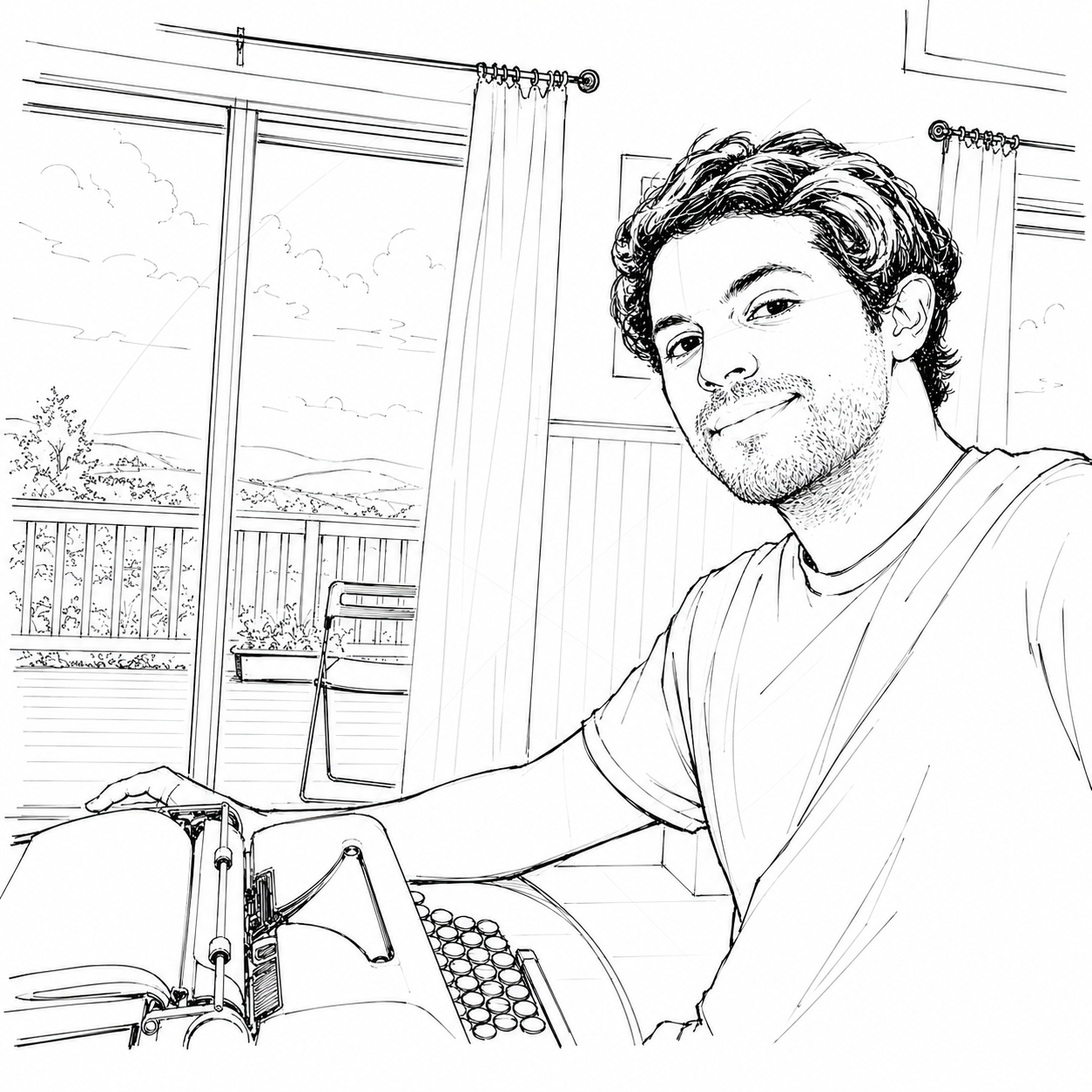
A site of one's own
- As a writer needs a site of one's own, a place designed for their particular psychology so they can be the most prolific, honest, adventurous version of themselves. Solitude is important. Montaigne, the founder of the essay, wrote up in his tower for a decade. When you are your own audience, your practice is self-justifying. You are intrinsically fulfilled, and do it regardless of validation, growth, or revenue. To become self-validating is to become a nuclear engine of creativity. When you write on your own site, chances are you will spend much time on ideas that no one will read. That's inefficient, but essays are inefficient. I need to ruthlessly follow what matters to me, with no fear of being illegible or invisible to others.
- That said, you can and should invite others into your garage. I still plan to keep my Substack and post there, but it will be more like a newsletter, a digest of the controlled explosions happening in my own neighborhood. I do believe in the value, even, the responsibility, of writing in public. By making your place tidy enough for friends, strangers, students, customers, mentors, heroes, whoever, to come in, it makes you put an extra oomph in your crafting of language, and it creates seeds from which relationships can grow. When you have visitors in your territory, they play by your own rules, so you're generally safe from mobs and barbarians. They will not trample over your furniture and throw the books from your shelf like they would in the town square.
- In 2023, I was hopeful that Substack could be an all-in-one platform—a website/newsletter/discovery engine—but it has heavily shifted into an app-centric social media platform. The app starts you off in an endless, algorithmic, engagement-ranked feed, and the design has slowly evolved to trap you in the app. When you click in article, the default URL is the Substack one. When you click into a person, you can't even go to their site anymore; you can only view them through their profile template. This means all the customization and self-archiving and mythologizing that goes into your site is off limits to the app, the thing they're trying to corrall attention through.
- I'm very allergic to "Substack is dead" posts, and most of the critique is often a projection of their own weaknesses (ie: when people naturally stop growing, it's easy to blame the algorithm than to take responsibility for it). In my case, the Substack algorithm has worked pretty well over the last two years, and I'd be stupid to abandon it. But the whole system has limited my intrinsic passion to write, and that matters more, enough that I'm willing to take the risk with a split publishing system: Substack newsletters that link out to my site.
- Back in 2020, a Write of Passage concept was the "public to private bridge," meaning you find people in social media feeds, but then redirect them back to a place of your own. Now that Substack is mostly a social media network, I think that same strategy applies. It's not where I want to host my essays anymore. I'll host newsletters and paid content there, but the timeless stuff wants to live in a place that is timeless.
- If you have a portfolio of writing, Substack feels like a pretty bad way to make your old work legible, especially within the app. There are no tags or sections. No about page. No navigation system. No ability to frame call to actions as visually dominant. The beauty of your website, especially if you build it from local markdown files, is (1) you have a single source of truth for all your writing, and (2) you can just respawn new interface and navigation systems as your portfolio evolves.
- Even though Substack lets you export your essays, it's really more like a failsafe, a backup incase you ever decide to leave. Of course, it's very nice to have that! But it's still a cloud-based system, where editing your past files is slow and clunky, and you have limited ability to point your essays elsewhere. When I have a local folder of my essays, I can very easily spin up a stylized website around any essay, or any group of essays (say, for example, if I'm making a proposal and I want to curate a handful of essays. I can point my AI at any combination of files and folders for context.