How should an essay writer read differently?
On building a syllabus, reading analytically, and the 12 essays we're reading in Essay Club
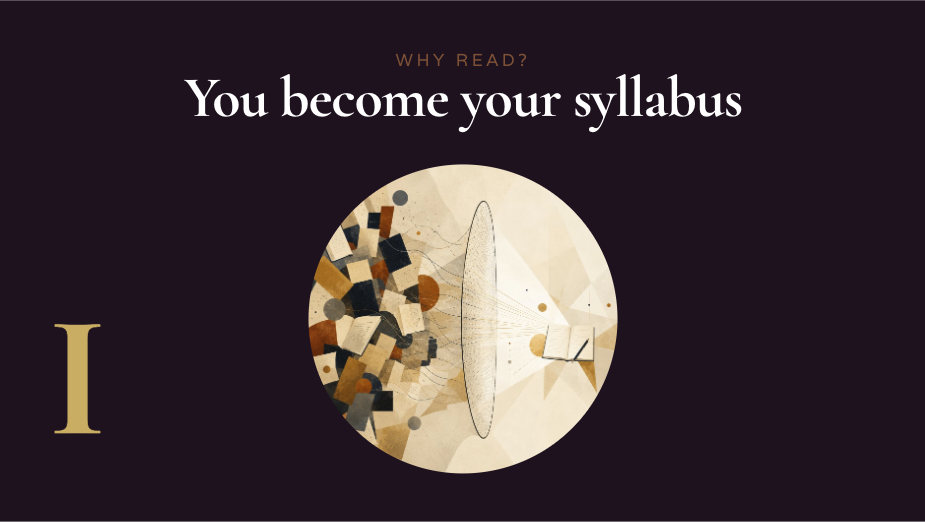
I've been circling this question for a few months now. As a new parent I find little predictable focus time but a surge in unpredictable reading time. I have always been semi-intentional with what I read (essay books), but this seemed like a new opportunity. What started as a simple question spiraled into an unruly project: simple book searches grew into a multi-year 121-book personal reading syllabus along with two custom apps, one to plan my reading each month, and another to organize my Kindle highlights, letting me write response essays that get auto-published to my website. Underpinning all of this is the belief that the essays I write emerge from my life and library. You become your syllabus.
Naturally, a good portion of my syllabus contains classic essay books, from Montaigne backwards and forwards, back to some proto-essayists of antiquity, and forward to living writers. While I read non-fiction and history for ideas, fiction and poetry for feeling, I read essays for form, to understand the composition patterns I can use in my own writing and editing. The best way to do this is to teach. I suppose Essay Architecture as a whole is an act of teaching, but part of this new reading project is live teaching, through sessions on Zoom.
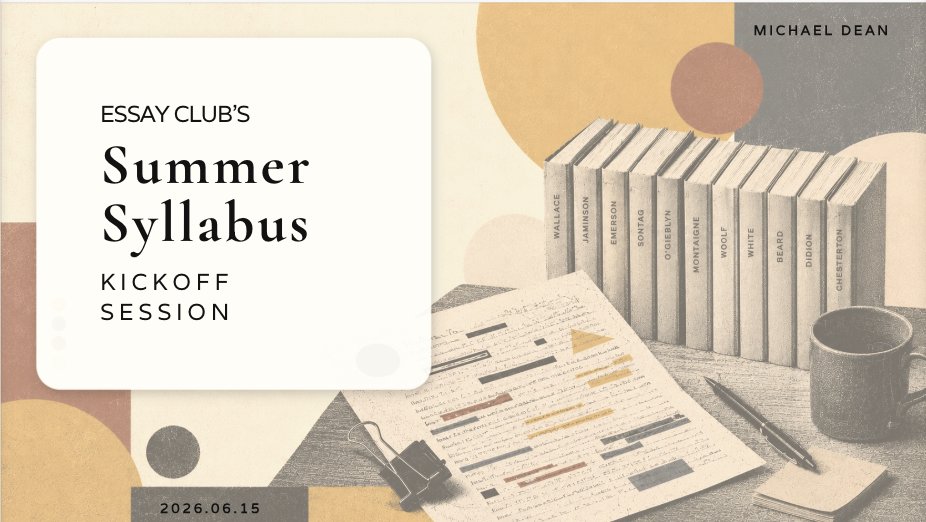
This post is a recap of a workshop I gave on Monday, June 15th (2026). It covers both the high-level questions of mine in terms of "how should an essay writer read?" but then zooms into the practical: how you can join us this summer to analytically read a classic essay every week.
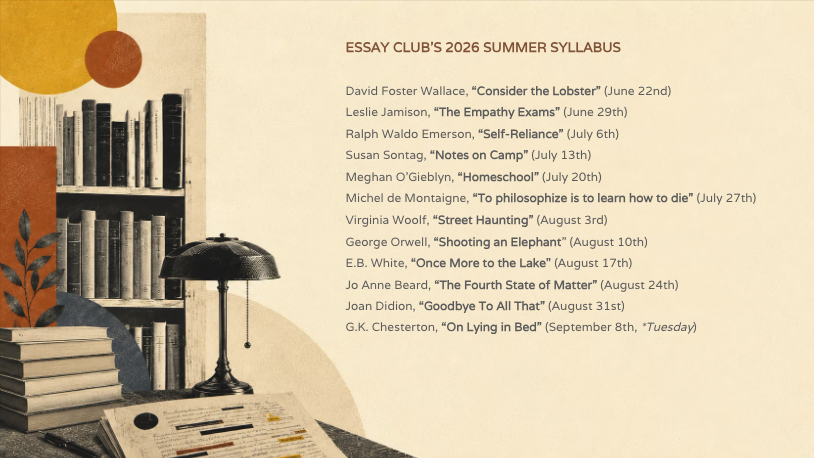
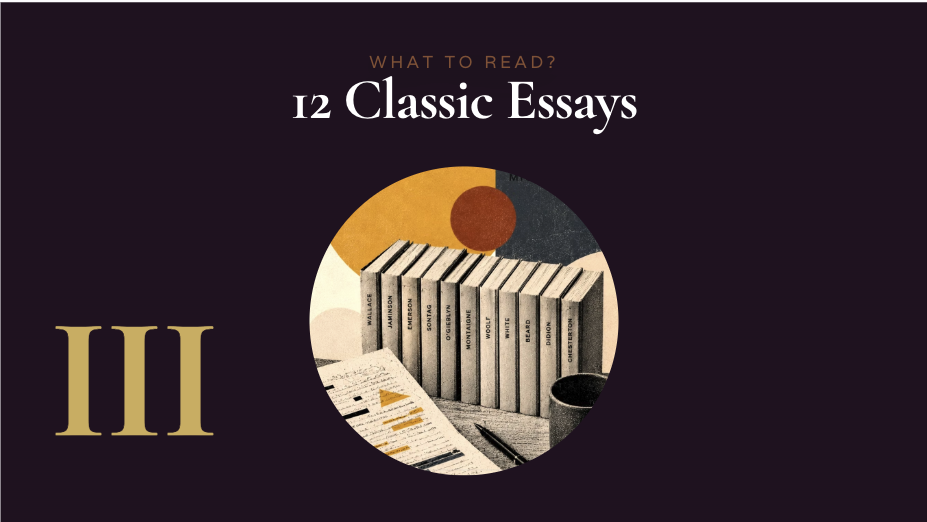
I'll start by getting to the point: here's the syllabus. I imagine you've heard of many or most of these writers, but maybe you've never read their core essays, or maybe you have but never read them analytically to understand how they work. That's our goal.
- David Foster Wallace, "Consider the Lobster" (June 22nd)
- Leslie Jamison, "The Empathy Exams" (June 29th)
- Ralph Waldo Emerson, "Self-Reliance" (July 6th)
- Susan Sontag, "Notes on Camp" (July 13th)
- Meghan O'Gieblyn, "Homeschool" (July 20th)
- Michel de Montaigne, "To philosophize is to learn how to die" (July 27th)
- Virginia Woolf, "Street Haunting" (August 3rd)
- George Orwell, "Shooting an Elephant" (August 10th)
- E.B. White, "Once More to the Lake" (August 17th)
- Jo Anne Beard, "The Fourth State of Matter" (August 24th)
- Joan Didion, "Goodbye To All That" (August 31st)
- G.K. Chesterton, "On Lying in Bed" (September 8th, *Tuesday)
Before I get too theoretical on the philosophy or mechanics of reading, I'll share what we actually plan to do each week (on Mondays at 7pm ET). I run a community called Essay Club—which has 60 of us and has been running for 2.5 years now—and we kicked off 2026 with "monthly readings." Our members voted for this—among other features—but I originally set it up like a traditional book club with assigned readings (and nobody wants homework). We quickly realized that since essays are short, we could read them together on the call. We've run this session four times now, and I guess I would call it a "co-reading" experience, which feels sort of novel.
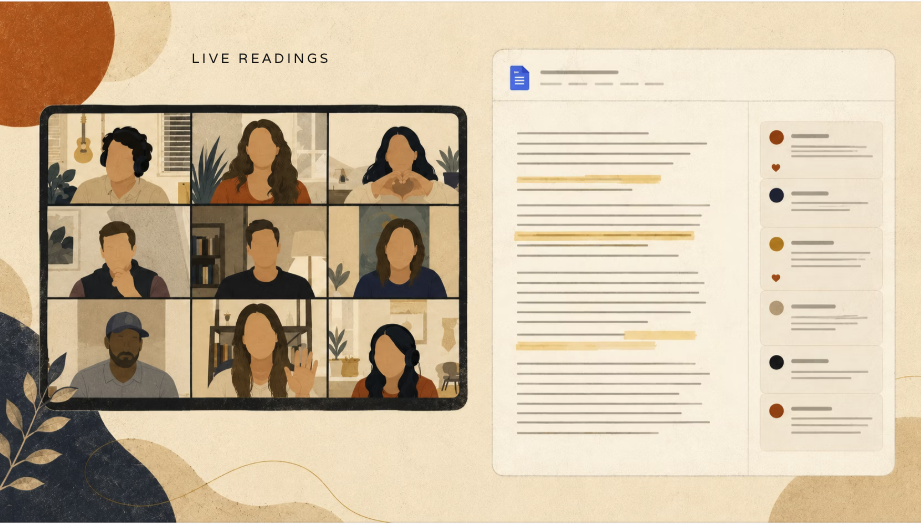
Here's how it works:
- I start with a 5-10 minute presentation where I give you context on the writer, and show you diagrams to illustrate some of patterns that the essay is representative of.
- We all read for 20-30 minutes in the same shared document and comment as we read. This let's you see how different people are all reacting to the same material. In case you can't make the session live, you'll still be able to read along through our shared doc.
- After that we jump into breakout rooms to talk it through, and then reconvene as a group.
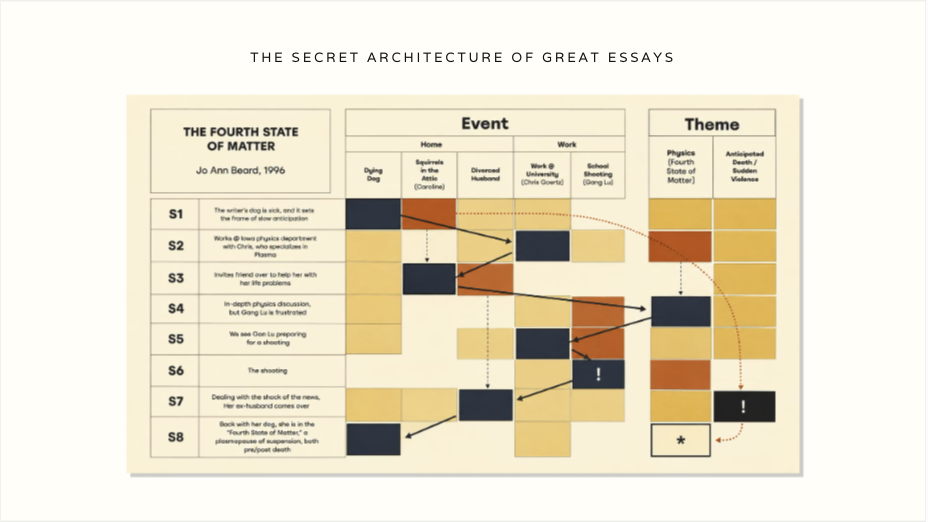 Here's a diagram of Jo Anne Beard's "Fourth State of Matter," which we're reading in August.
I included the links above in case you want to read through these on your own, but Essay Club give you the accountability to actually stick with it. Reading ambitions are one of the easiest things to deprioritize when you get busy. Honestly, I'm partly doing this for myself; it forces me to show up every week with a firm understanding of how each essay is working (and it also helps me expand v2 of the textbook with a rich example bank). Most importantly, we aren't reading for reading's sake—which BTW is totally valid—but our main goal is to publish essays; we also have weekly feedback calls Friday at 3pm ET, and all aim to publish one piece at the edge of our ability by the 1st of each month.
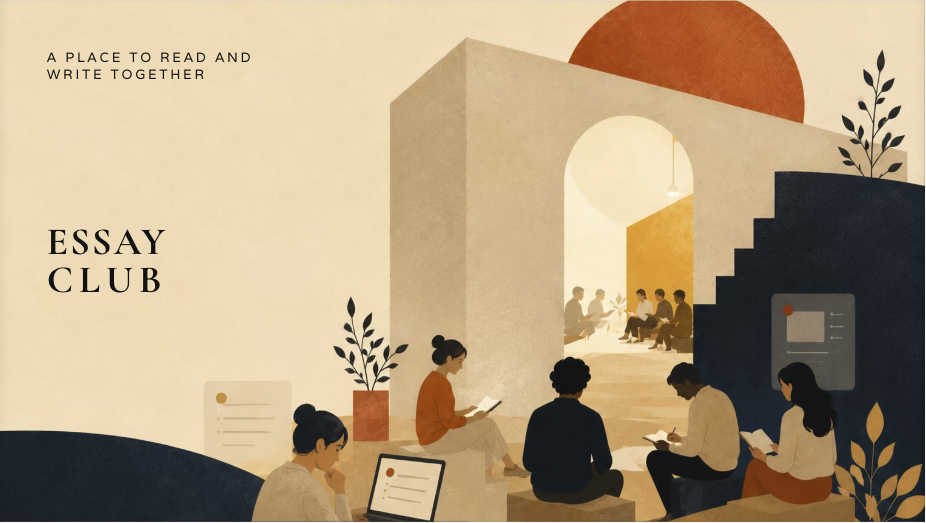
If you're considering joining, check out the Essay Club website, and when you're ready you can sign up for an annual membership here, which is discounted at $450/yr through July 4th. The rest of this post is about how I'm personally thinking through my reading practice, covering everything from how to build a syllabus to how to read analytically and syntopically. I think it will give you helpful context whether you want to join Essay Club or want to build a syllabus of your own. (I actually recommend both: join a community to study essay form, but then build your own path that's more specific to what you're writing about).
An essay is made made of Material that orbits a Thesis. That material comes from your life and your library, so in some fundamental sense, you're only limited by how you live and what you read. I guess the real question is though, are you reading in a way so that it oozes into your writing?
There are all sorts of annoying reading maxims—on what you should read ("only read primary sources, never commentary or summaries"), how you should read ("never listen at 2x speed"), the volume of reading (X books per year)—that get disconnected from a reader's specific goal. All advice is contingent on your goal. A friend of mine reads for the purpose of doing something analog and relaxing before bed that isn't scrolling, and it would be dense of me to insist that he highlight excerpts and diagram the structure.
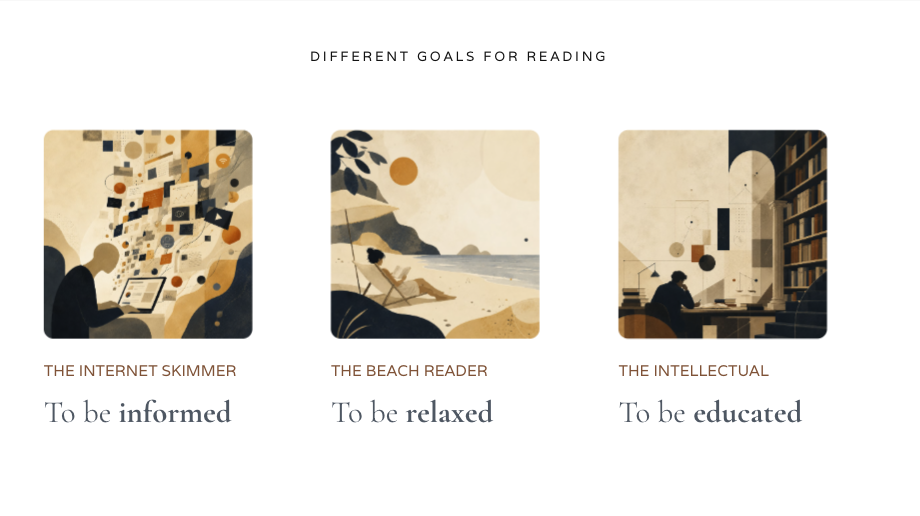
There are secondary reasons why I read of course—sometimes I'll binge Internet articles to makes sense of an event, or scour Wikipedia to become articulate in a sphere I feel like disoriented in—but the core reason I read is to evolve my writing. It's impossible to know exactly how reading changes you, but over time, in very noticeable ways, it all gets imperfectly synthesized through your writing. The inputs shape the outputs.
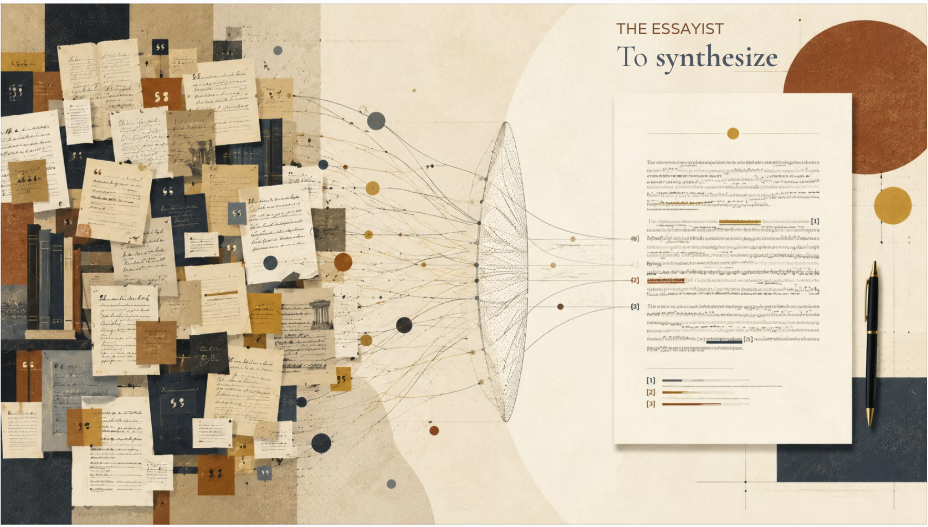
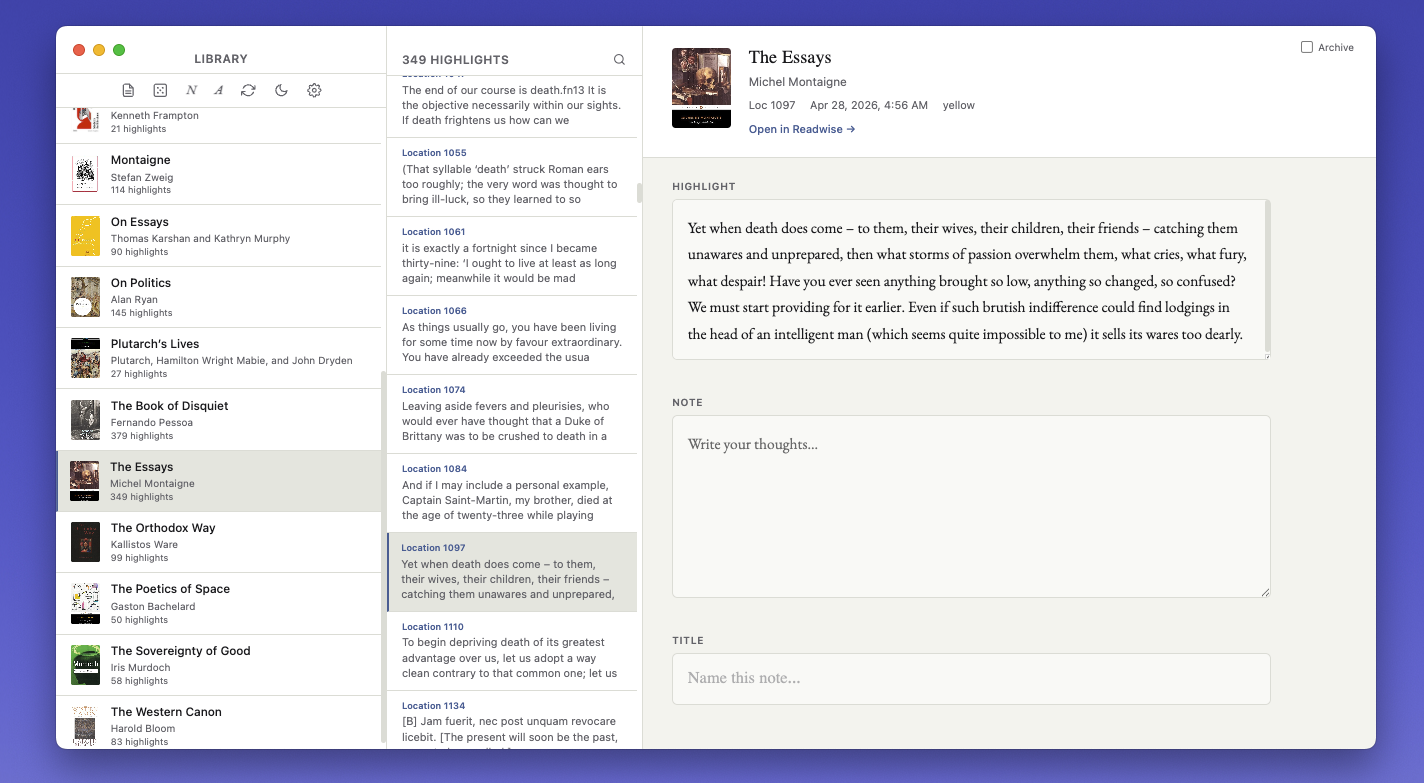
It's not about vanity book counts or the recital of facts at meetups, but slowly shaping the future corpus. I subconsciously absorb a writer's voice, consciously break down essays to see how they work, and save excerpts that becomes prompts for original essays. Here's an app I built to browse highlights; anything I write in the text field on the right gets auto-synced to my website.
This idea of "responding" to the authors I read was inspired by going deeper into Montaigne. If Montaigne were to be described for a single thing, it's that "he is the subject of his book," which was radical for the time; this gives the impression that all his ideas derive from his own life and mind. On the contrary, a typical essay of his might be peppered with 30 or so quotes from antiquity, featuring Plutarch, Seneca, Epicurus, Augustine, etc. He was a man of his library, and the genre of essay was forged by Montaigne's commonplace book, setting a very literal example for how your inputs shape your outputs.
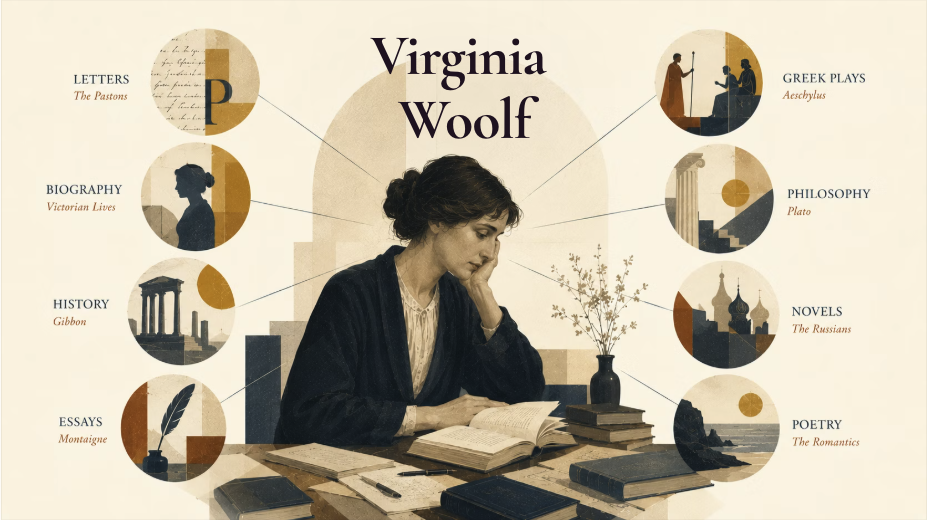
A modern inspiration is Virginia Woolf, whose first two essay volumes were titled, "The Common Reader." These were responses and extensions of her reading diet, which was extremely polymathic in range. She was reading the Ancient Greeks (in Greek), the Romantic poets, Victorian biographies, Montaigne, and more, simultaneously, each shaping the topics of her writing, and the voice that would come to be her own.
It's been two years since I've committed to reading essay books, but I see this new syllabus project as a chance to widen the aperture. I've re-examined my physical library, found out lists, gathered recommendations, and found the inspirations of my inspirations. As the list grew, I split it into four genres, each of which I think will offer me something unique as an essay writer.
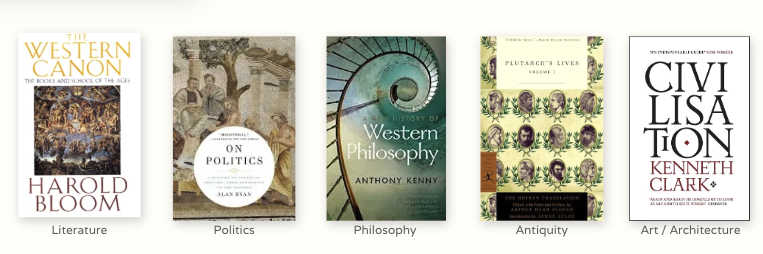
I'm reading History to build fuzzy maps across disciplines. It's about breadth. I'm looking for historians, curators, and biographers who can write literary textbooks (informative, but fun to read). This goes against the maxim of "read primary sources." If I were to read the western canon in full, it might take me 10 years and bottleneck my own publishing. Instead, I can read a chapter per month of Harold Bloom's The Western Canon, and slowly build a model of the history of literature. Who are the Bloom's in each domain? The goal is to slowly read many textbooks in parallel, each at a chapter per month. As an essay writer, I want to be able to quickly connect original ideas to historical ones. Sure, I could use AI to surface these connections, but I'd rather have concepts and figures available in the substrate of thought itself.
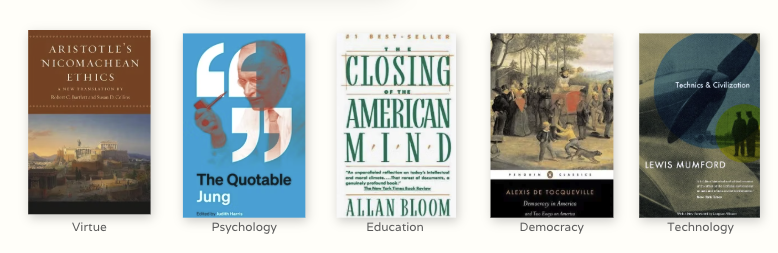
I'm reading Non-fiction to go deep on specific topics that I want to write essays on. That means this list should look different for each writer. I've gathered books across 5 categories: moral philosophy, perception, education, technology, and democracy. By having a list of many books around a single idea, I can read "syntopically" (more on that later). Realistically, among all my other reading, I can only read one of these per month.
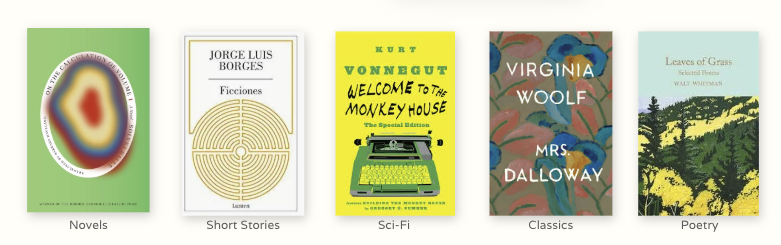
I'm reading Fiction to understand narrative and feeling. Unlike the last two genres, this one is less about idea collection and more about experience the range of ways literature can move you, and understanding the art of the microcosm. I'm convinced that David Foster Wallace is such a good essayist because he was focused on fiction; this makes his essays very allegorical, where abstract concepts are baked into tangible characters, places, and situations. I intentionally don't have long books on my syllabus (ie: no Middlemarch, Moby Dick, or Infinite Jest), because again I can't read more than one of these per month. I limited my search to novels under 250 words, and to short story collections—the picks are evenly split between modern, classic, and science fiction.
I'm reading Essays to understand the form. It surprises me when I learn that aspiring essay writers on Substack don't read the history of the genre they write in. It's a 1:1 translation, and you not only get a complete literary experience in a single sitting, but you get to absorb pattens to bring into your own work, whether deliberately or through osmosis. Personally, I'm trying to read across time periods (thought not in any particular oder), along with specialized anthologies—including all 40 introductions to The Best American Essays series—and some works in popular literary theory, the main two being Essayists on the Essay and On Essays.

If you're interested in building out a syllabus, you need to factor in both what you're actually interested in, and what you have the bandwidth for. But at the very minimum, if you have a publishing cadence for essays, you should consider a reading cadence for classic essays too. I've done a daily classic per day, and it's very doable, but to fully digest and teach these, I'm slowing it down to one per week.
I'm going to read Reading Like a Writer, once I finish How to Read a Book, which is a funny title that gets laughs whenever I bring it up. The paradox is straightforward: if you can read, why read the book?; and if you can't read, how will you be able to read the book?"
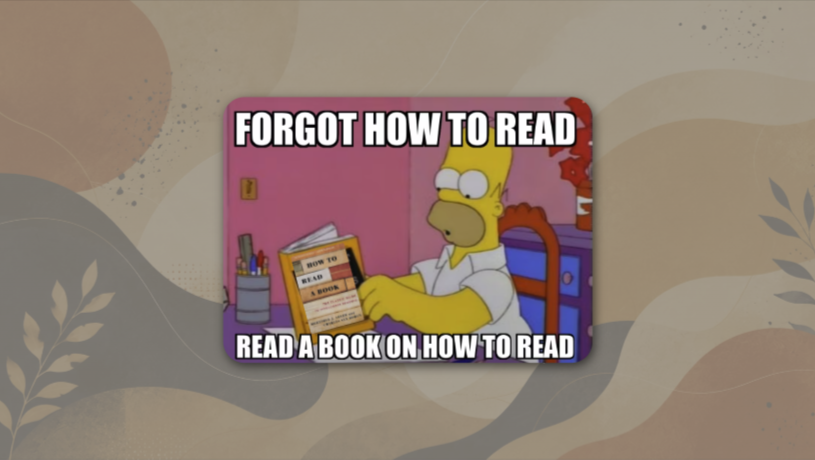
This assumes reading is a binary thing—are you literate or not?—when really it's more like skiing or carpentry or writing, a skill with multiple levels of difficulty.
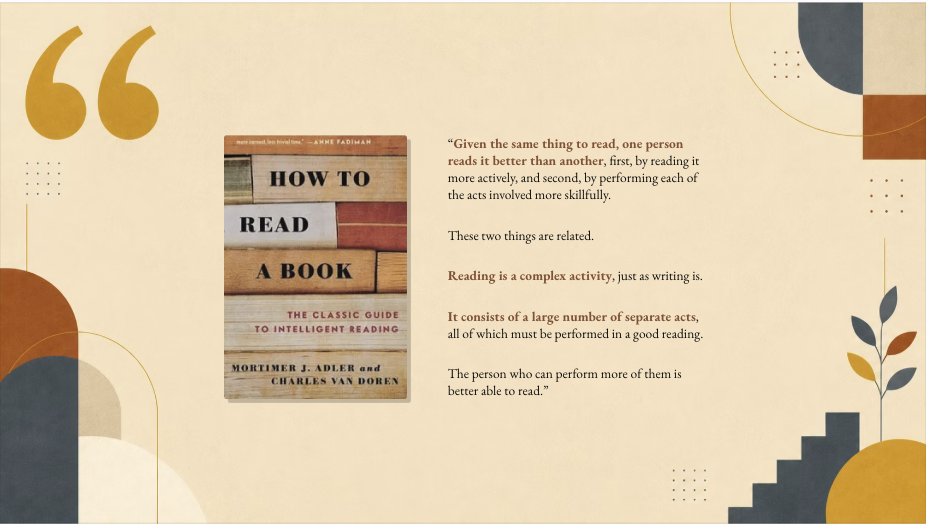
From Mortimer J. Adler and Charles Can Doren's "How to Read a Book":
"Given the same thing to read, one person reads it better than another, first, by reading it more actively, and second, by performing each of the acts more skillfully. These two things are related. Reading is a complex activity, just as writing is. It consists of a large number of separate acts, all of which must be performed in a good reading. The person who can perform more of them is better able to read."
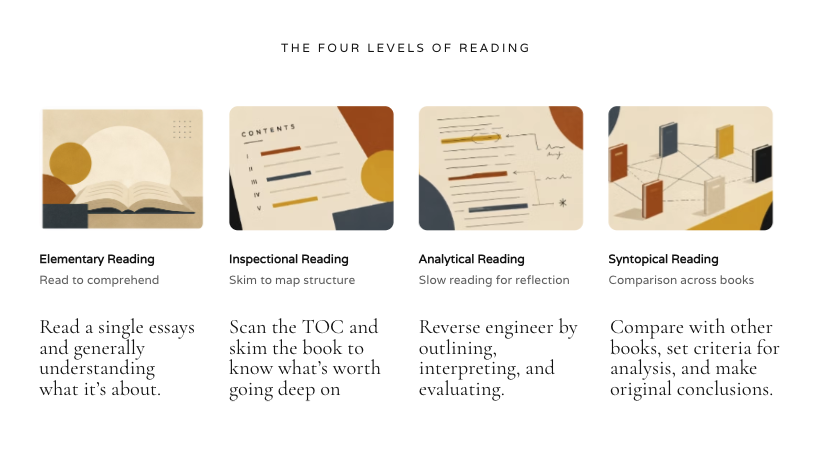
The book breaks down four levels of reading, each one stacked atop the other.
- Elementary Reading is about basic comprehension: do you get it? It's very possible to read Heidegger or Dostoyevsky or any of the convoluted jargon-filled architecture theory textbook and walk away without a firm idea of what's been actually been said. Without an elementary understanding, it's hard to do anything at the higher levels.
- Inspectional Reading is not something I've done much of before recently building out my personal syllabus. It's not quite "speed reading," (at 2-3x speed) but flipping through an entire book in 30 minutes, scanning the table of contents and selectively reading parts—ie: the first paragraph of each chapter—to get a feel for the prose and ideas. This helps you decide if it's worth reading in full. Maybe you only need to read a specific chapter based on your writing goals. Those 30 minutes might save you 30 hours of toil. If you're building a long term reading plan, it becomes crucial.
- Analytical Reading is when you very slowly make sense of something you want to understand. You break the work down into chunks so you understand exactly how the pieces cohere into a larger argument.
- Syntopical Reading is when you read analytical across many books to triangulate ideas, find disagreements, and extend into your own original research and essay writing.
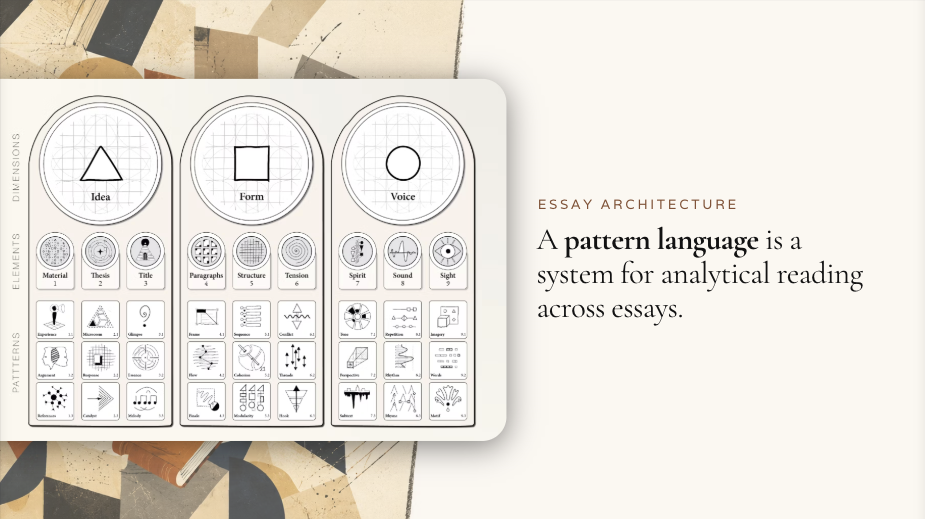
Analytical and syntopical reading is usually focused on the idea itself, but we can use these same concepts to deconstruct the composition of an essay. My pattern language is effectively a framework for syntopical reading. You use it across essays. Instead of inventing how to read analytical reading yourself, Essay Architecture gives you a tool of lenses to read through.
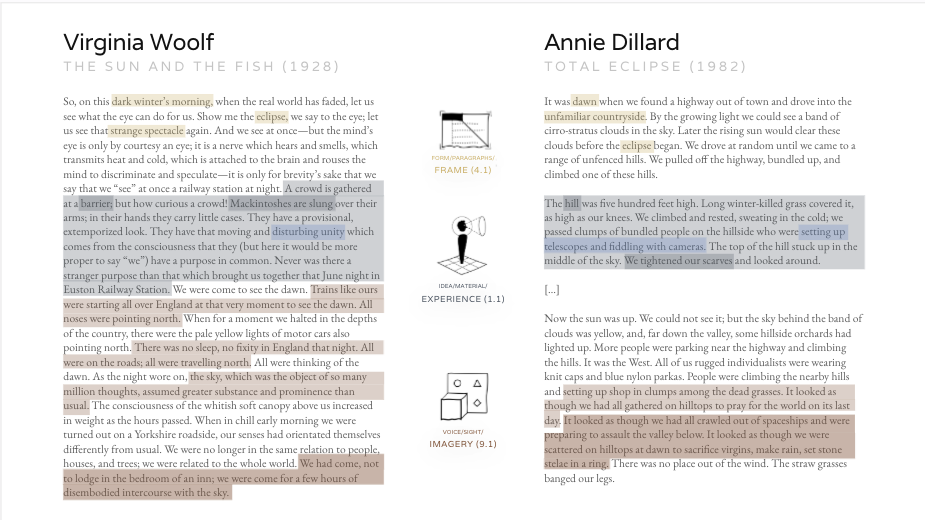
In our workshop we did an exercise where we all read two excerpts, by Woolf and Dillard, each about the total eclipse but fifty years apart. The excerpts were similar in many ways; they had a near identical frame—setting the when, the what, and the tone of the scene—the middle had an experience where they described the people around them, and each closed with imagery. But, they varied in how they used the Imagery (9.1) pattern. Woolf tapped into scale to induce awe, while Dillard tapped into alien and tribal metaphors to capture the fear and anticipation of the moment.
We won't just be reading 12 great essays analytically, we'll do so using a shared language so we can get very specific on the patterns that great writers use. Whether you use my pattern language, or create your own lenses for cross-essay reading, the point is that you can only really understand a concept when you see it across multiple works, taking on unique expressions based on different contexts. I write about this more in my essay How do you deconstruct prose?, on how we shouldn't just imitate syntax, rather we need to know the specific way to use a specific pattern to achieve a specific effect.
So far we talked about the importance of building a syllabus (inspectional reading) and then how to read (analytical/inspectional). Now I want to talk about why I picked these specific 12 essays. In the future, I would love Essay Architecture to help generate a 1-of-1 custom syllabus for you. After uploading your own work, and analyzing the patterns across it, my software could make you a personal reading list, including essays that both share your strengths, yet show your weaknesses elevated to their peak, giving you a vision into the writer you could become. That will take some time! But for now, the goal is to make a general introduction, a good starting point for someone who hasn't start reading the classic essays yet. What are the heuristics to make this list?
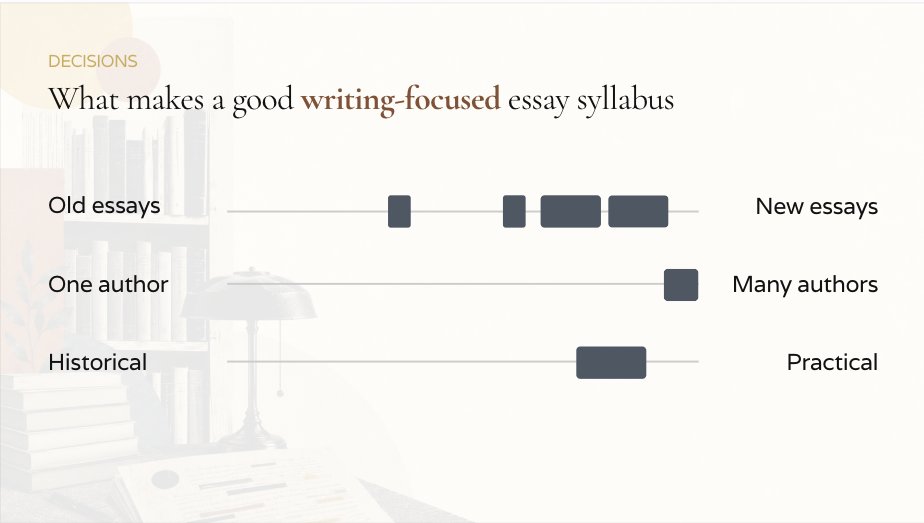
I decided that we should focus on many authors (one per week) with the practical goal of learning patterns we can bring into our own work. There might be a future where we do single author deep dives, or historical assays into more obscure writers, but for now, I want to introduce you to a range of writers. I also decided it would be most accessible to focus on new essays, since they're more parallel to what we're all publishing today. That said, I did want to include some older writers that have more challenging, relatively archaic prose, because they show the power of a medium before text was neutered and optimized for mass readability—I'll do my best to provide a frame and the right translations so you have all the context you need.
I started with 12 writers that I've been reading and am starting to know decently well. Across six of the more prominent anthologies and theory books, each of these essayists are featured at least twice, meaning there's an objective anchor to validate the importance of these figures.
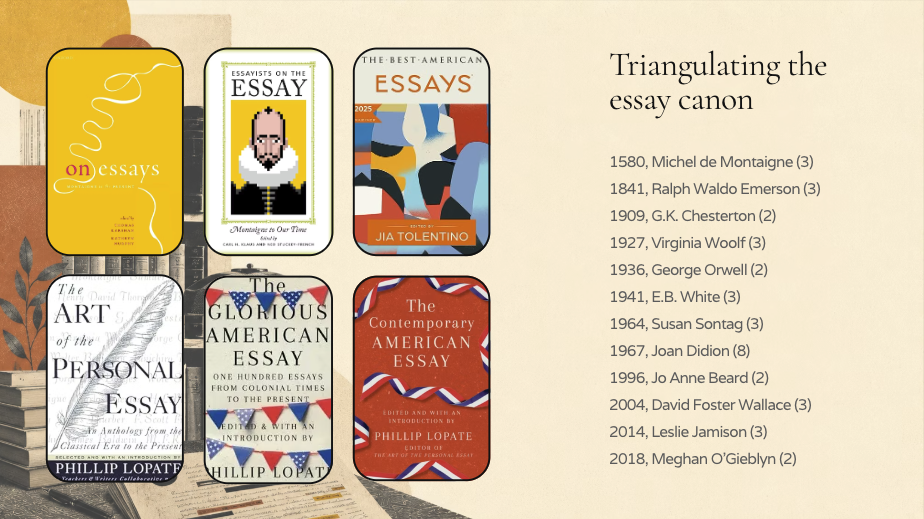
I also made sure there was a good amount of "opponent processing" in my selections, so that you would see the largest range of possibilities:
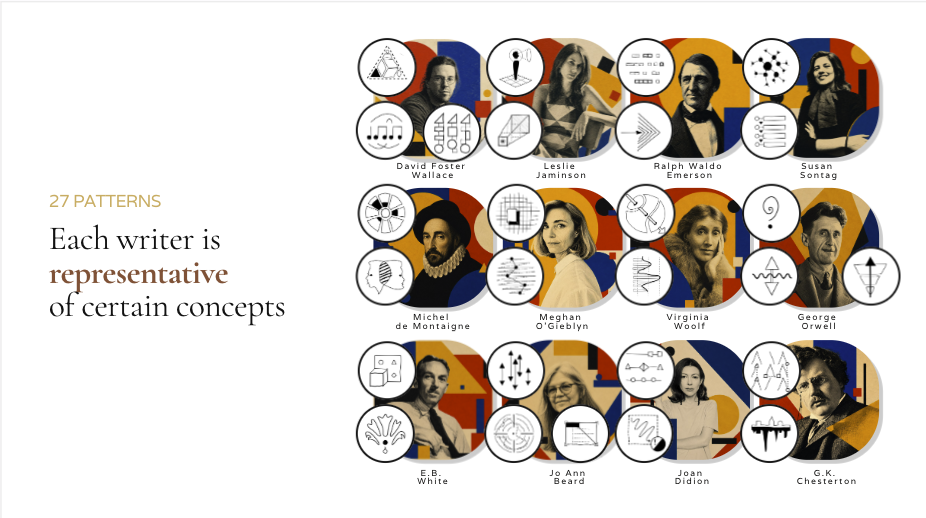
- Each writer has an "opposite." For example Emerson and Montaigne represent the dichotomy of the skeptic vs. the sermon. Didion and Sontag represent the journalist vs. the academic. Orwell and White represent the aggressive vs. the sensitive.
- Within these twelve, each could also be a representative of a distinct "mode" of writing; where patterns are about the objective patterns the reader experiences, think of mode as the internal sensibility that drives creation. I'm defining these modes as inquiry (getting to the bottom of a question) vs. interiority (rendering their consciousness), and expression (articulating through poetic words) vs. critique (engaging with their culture).
- And finally, each selected essay will be a lens to properly understand a particular pattern—DFW for microcosm, Jamison for perspective, Emerson for word choice, Sontag for references, etc. I think it will be easier to remember these patterns when they're personified through people and specific essays.
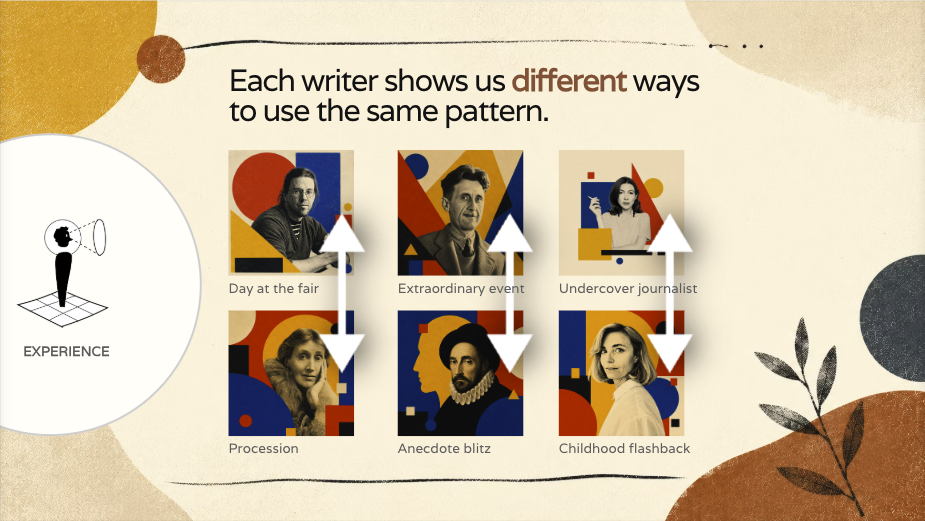
Over time, we'll get to see very different articulations of the same pattern. A personal experience can be contained within a single place ("a day at the fair" essay), or it can be an A>B journey. It can be an extraordinary event, the kind of thing that happens once in your life, or maybe your essay just has a spattering of humble anecdotes. It can be an experience you purposely throw yourself into like a journlist, or it can be a recollection of your childhood, the things that inevitably happened to you.
If you want to work through these essays intentionally and with a group, that's what Essay Club is for.
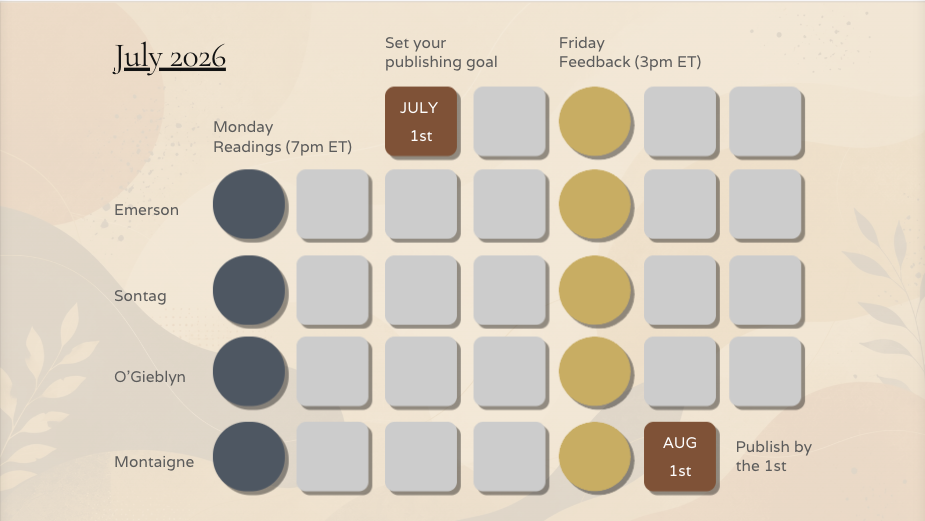
We don't just read together, we write and publish. Our readings are meant to augment our own original writings. The group runs on a simple monthly template. At the beginning of each month we set our goals, and we're all unified with a shared publishing deadline: the 1st of each month (marked by a "publish party" where we read and comment on each other's work).
Every Friday at 3pm ET we have a working session, where you can exchange feedback (1:1 in a breakout room), talk through your ideas, or simple block out the time to write.
Then on Mondays at 7pm ET we have our reading sessions. In July for example, you'll read Emerson, Sontag, O'Gieblyn, and Montaigne, each of who might teach you a pattern to integrate into your own work.
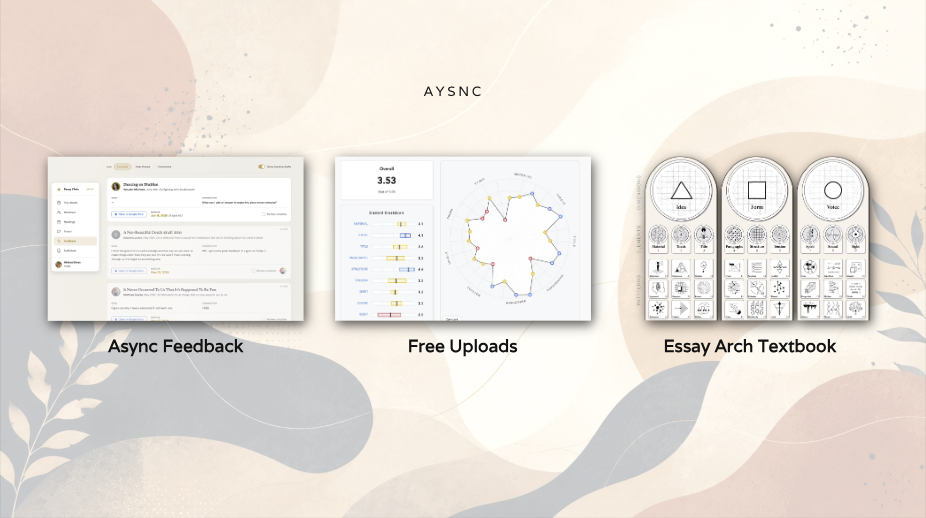
If you can't make the live calls, there's a lot happening async too. For one, all our live readings happen in a shared document, which you'll have access to, meaning you can read it on your own time while still seeing how everyone reacted in the moment. Additionally, we have a forum where you can upload drafts for async feedback exchanges. And since the club is so anchored in Essay Architecture, every gets the textbook for free, along with free uploads to the Essay Architecture software, which analyzes your essay along the 27 patterns to help you identify areas to work on.
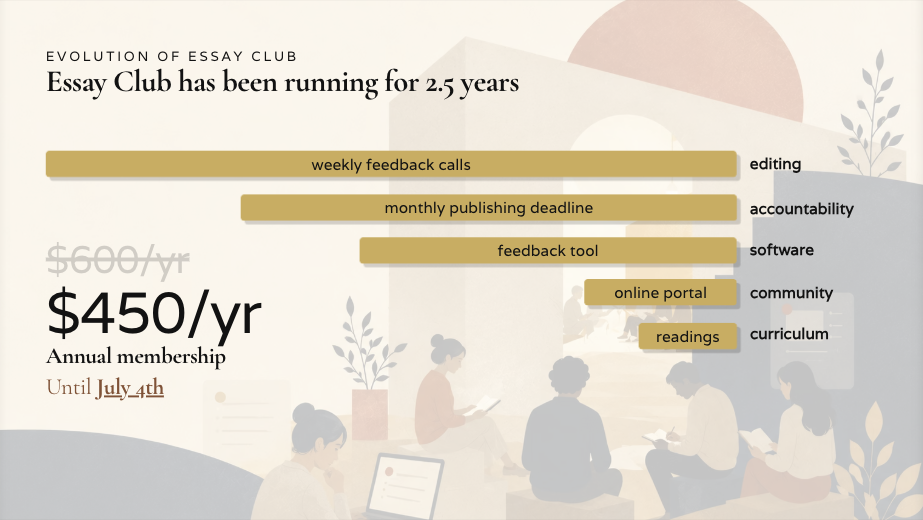
I've been running Essay Club for 30 months now. The goal is to sustain this for the long haul, to create a place where I can be independent writer, teacher, and scholar of the essay; I say this to say that I'm in there writing with you, and I'm invested in evolving the club because it's integral to my own practice. Around every 6 months we add a new feature, and this new weekly reading curriculum is just the latest. More to come. It's structured as an annual membership at $600/year, but I'm offering it at $450/year through July 4th to promote the launch of our summer syllabus.
However you move forward, I hope this got you thinking about how you read. I recommend you take the time to think through the writer you want to become, and shape your own syllabus accordingly (in addition to joining our essay reading list). Try reading less, but reading slower and more deliberately, looking for patterns across works. And finally, Essay Club gives you the structure to do this every week, so even if this whole idea of building your own syllabus sounds intimidating, all you have to do is show up and read.